By Grace Felder and Elena Woodruff

Celebrating Women’s History Month

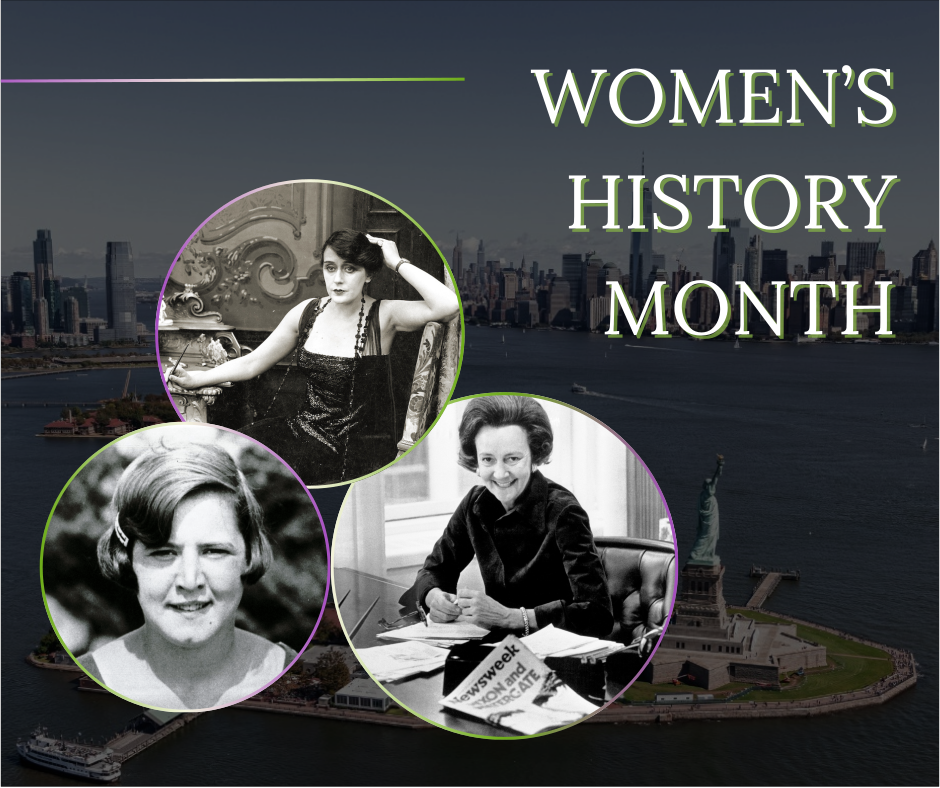
Every March, Women’s History Month invites us to celebrate the women who have shaped our nation and expanded the possibilities for generations to come. This year, we are proud to honor several women who were pioneers in their respective fields. 

At the Foundation, we are especially inspired by the immigrant stories behind many of these trailblazers. Our team at the Family History Center has uncovered powerful family histories that reveal how courage, resilience, and opportunity shaped the journeys of extraordinary women.  

Join us this Women’s History Month as we honor women’s firsts, celebrate their lasting impact, and reflect on the generations of women who continue to break barriers today. 

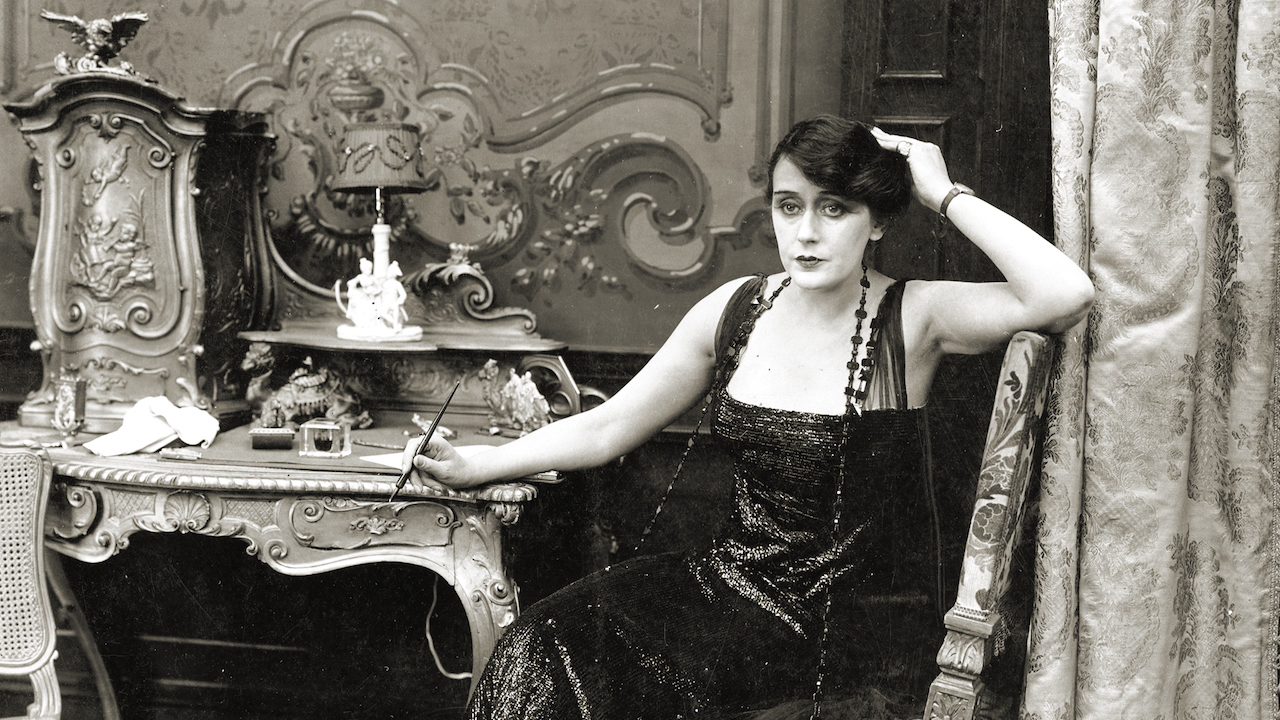
Alice Guy Blaché

Alice Guy Blaché (1873 – 1968) was involved in the film industry during its earliest years. She began her career as a secretary at one of France’s first motion picture companies, the Gaumont Film Company. There, she rose through the ranks and in 1896, directed the film La Fée aux Choux, becoming the first female film director in historyAlice moved to the United States soon after her marriage to Herbert Blaché (otherwise known as Herbert Blaché-Bolton). In March 1907, the newly married Blaché-Boltons arrived in New York on board the La Touraine. 

In 1910, she and her husband created the Solax Company, which became the largest film studio in the U.S. at the time. During her career, Blaché directed countless films and helped pioneer a number of techniques. For her work, she was awarded the French Légion d’honneur
IFC Film Center

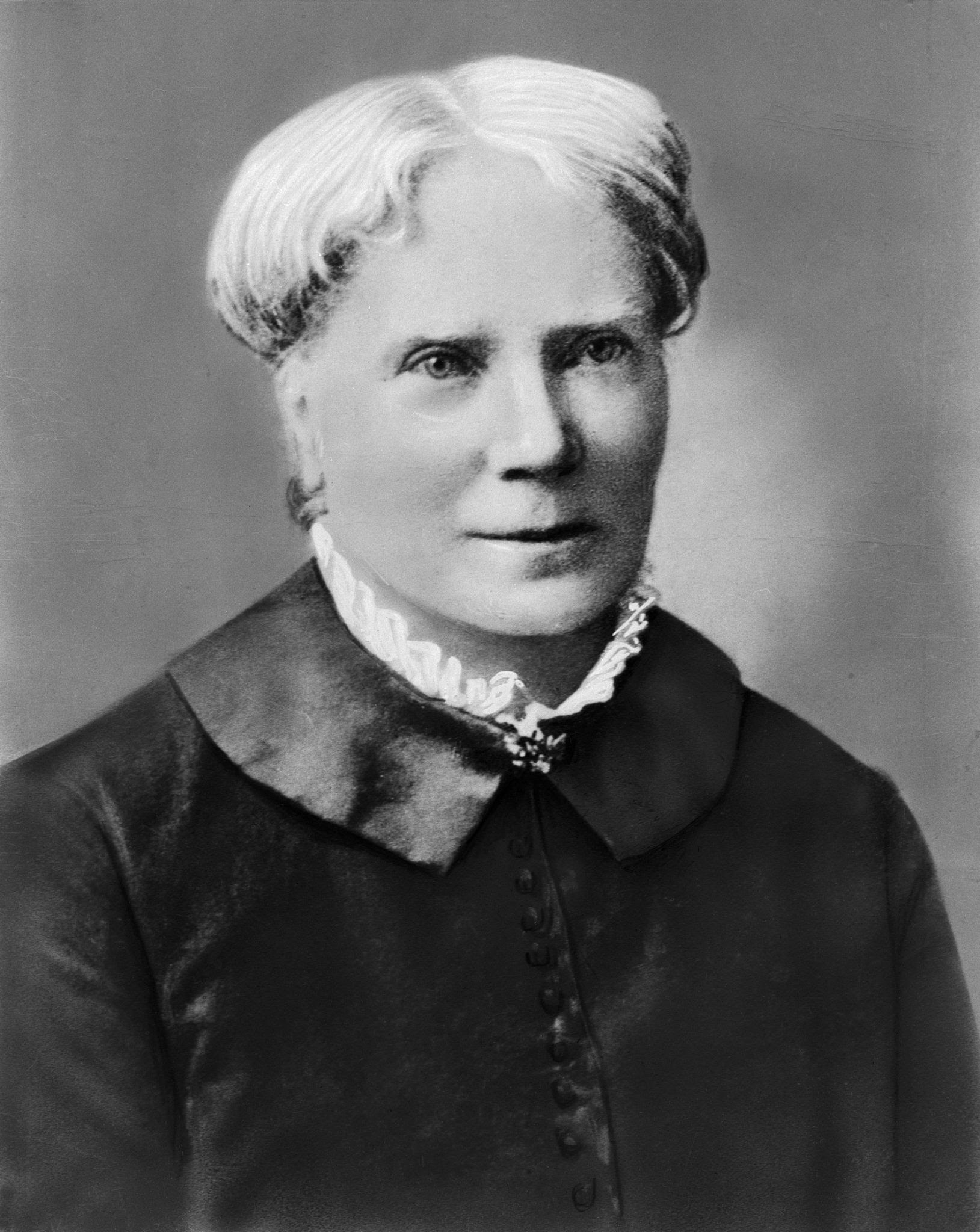
Elizabeth Blackwell

Elizabeth Blackwell (1821 – 1910) was one of several children born to sugar refiner, Samuel Blackwell, who would go on to achieve international acclaim. The Blackwells raised their children on progressive ideals like abolitionism and women’s rights.  

This certainly contributed to Elizabeth Blackwell’s lifelong pursuit of education. After working as a teacher, Blackwell developed an interest in practicing medicine, believing women could care for patients in a gentler and more compassionate way.  

After facing rejection from many of the country’s top medical schools, she was admitted to Geneva Medical College. When she graduated in 1849, she became the first woman in the United States to receive a medical degree. She would go on to practice medicine in the US and abroad until her retirement in 1880.  

Born in England, Blackwell immigrated to New York with her family on the ship, Cosmo, in October 1832.  

Bettmann // Getty Images

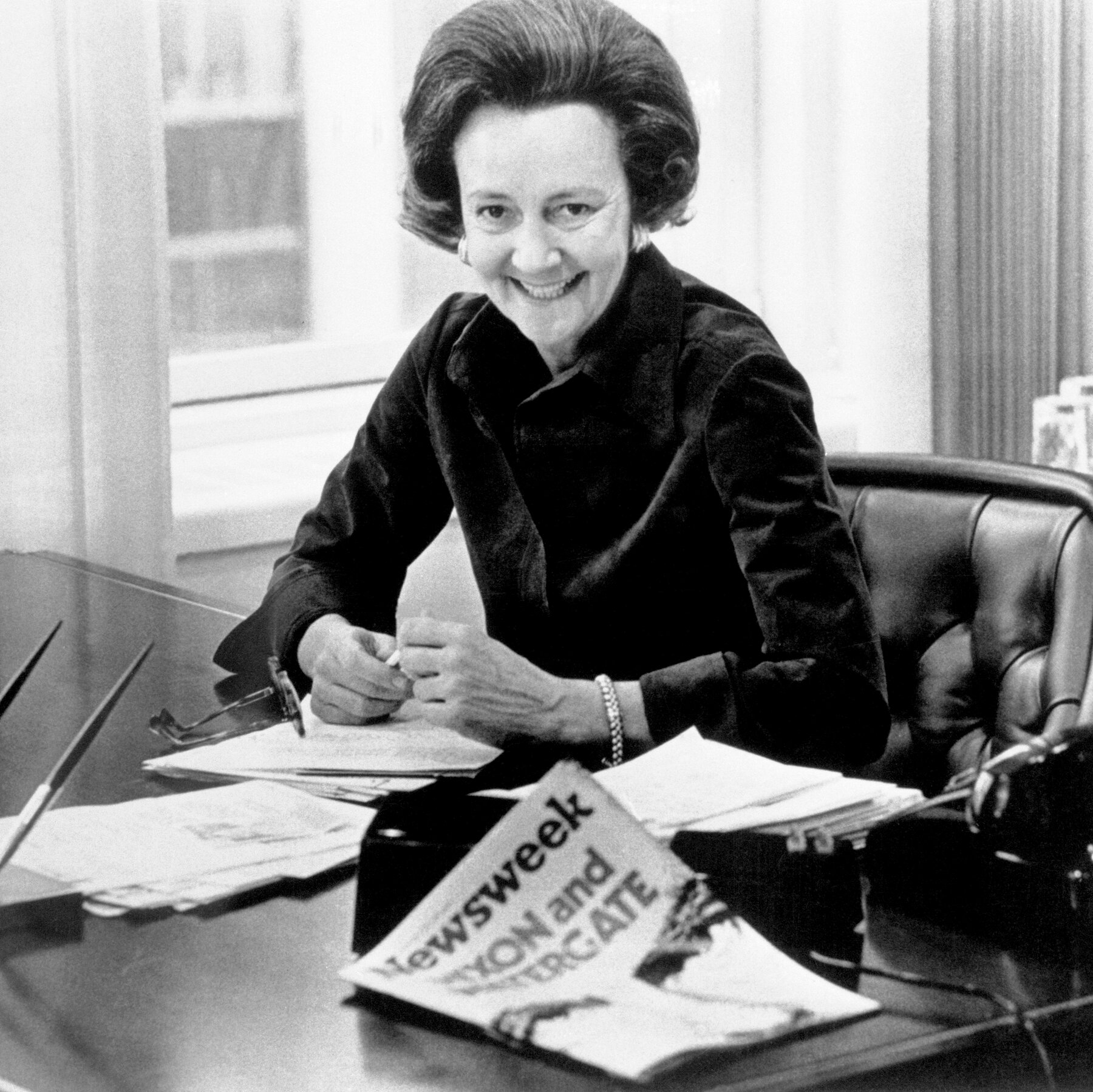
Katharine Graham

Katharine Graham (1917 – 2001) is best known for her time as publisher of the Washington Post newspaper. Born Katharine Meyer, Graham’s association with the Post began when her father Eugene purchased the newspaper in 1933. Eugene initially passed his ownership of the paper and position as chairman of the Washington Post Company to Katharine’s husband, Philip Graham. Following Philip’s death in 1963, Graham inherited both the company and the paper.  

In 1972, she became the first female CEO of a Fortune 500 company. Under her leadership, reporting from the Post on the Watergate scandal led to the resignation of President Richard Nixon and earned the paper the Pulitzer Prize.  

In November 1859, Graham’s grandfather, Eugene Meyer, immigrated to the US from Germany on board the ship Vanderbilt 

Bettmann // Getty Images

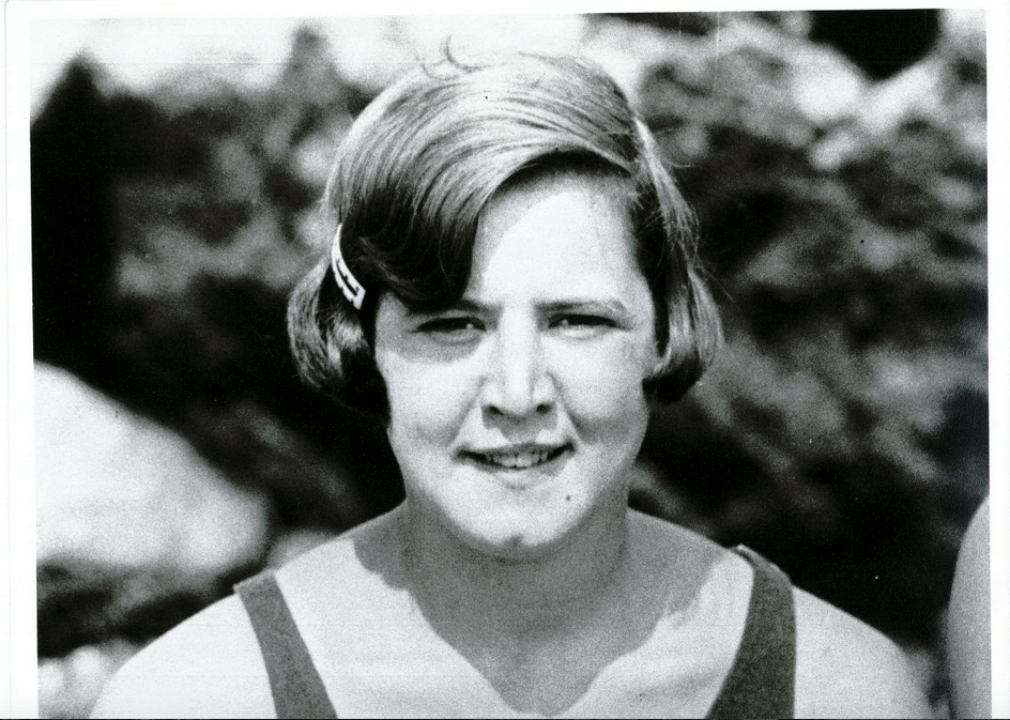
Gertrude Ederle

Gertrude Ederle (1905 – 2003) was known by members of the press as the “Queen of the Waves.” Ederle began swimming at a young age and quickly established herself as a competitor. As a teenager, she set multiple world records in swimming, seven of which she set in a single day in 1922.  A member of the US team at the 1924 Olympics, she took home one gold and one bronze medal.  

On August 6, 1926, Ederle became a global superstar when she became the first woman to swim the English Channel, accomplishing the feat in 14 hours and 31 minutes, setting yet another world record. She returned to the States a few weeks later on the Berengaria, where she was met with a ticker-tape parade through the streets of New York 

Ederle was the daughter of German immigrants. Her father, Heinrich “Henry” Ederle arrived in New York on the ship Havel in May 1892.  

Swimming World Archive

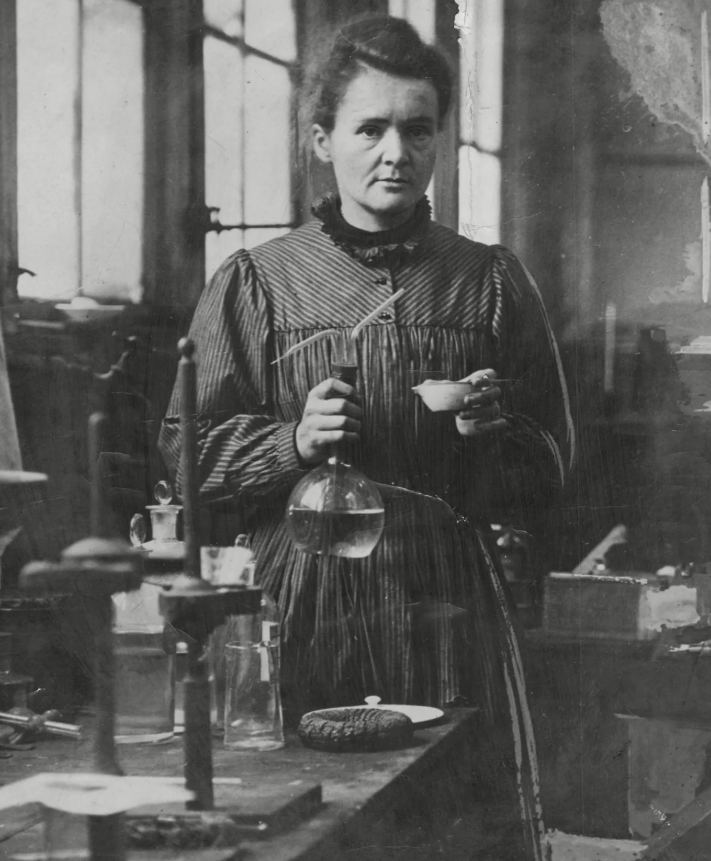
Marie Curie

One of the most famous scientists of all time, Marie Curie (1867 – 1934) also passed through the port of New York. Born Maria Salomea Skłodowska in Poland, Curie first learned the basics of physics and other scientific concepts from her father Władysław, himself a well-respected teacher. After years of working to support her family as well as her own educational goals, Curie was able to enroll at the University of Paris.  

While in France, she met fellow scientist Pierre Curie who she went on to marry in 1895. The couple worked together for years and together earned the Nobel Prize in Physics for their work on radioactivity. This made Curie the first woman to win a Nobel Prize. In 1911, Curie was given the Nobel Prize in Chemistry for her discovery of radium, making her the first person to win two Nobel Prizes.  

In May 1921, Curie paid a visit to the United States, sailing into New York with her daughters Irene and Eve on board the Olympic 

Associated Newspapers // shutterstock.com

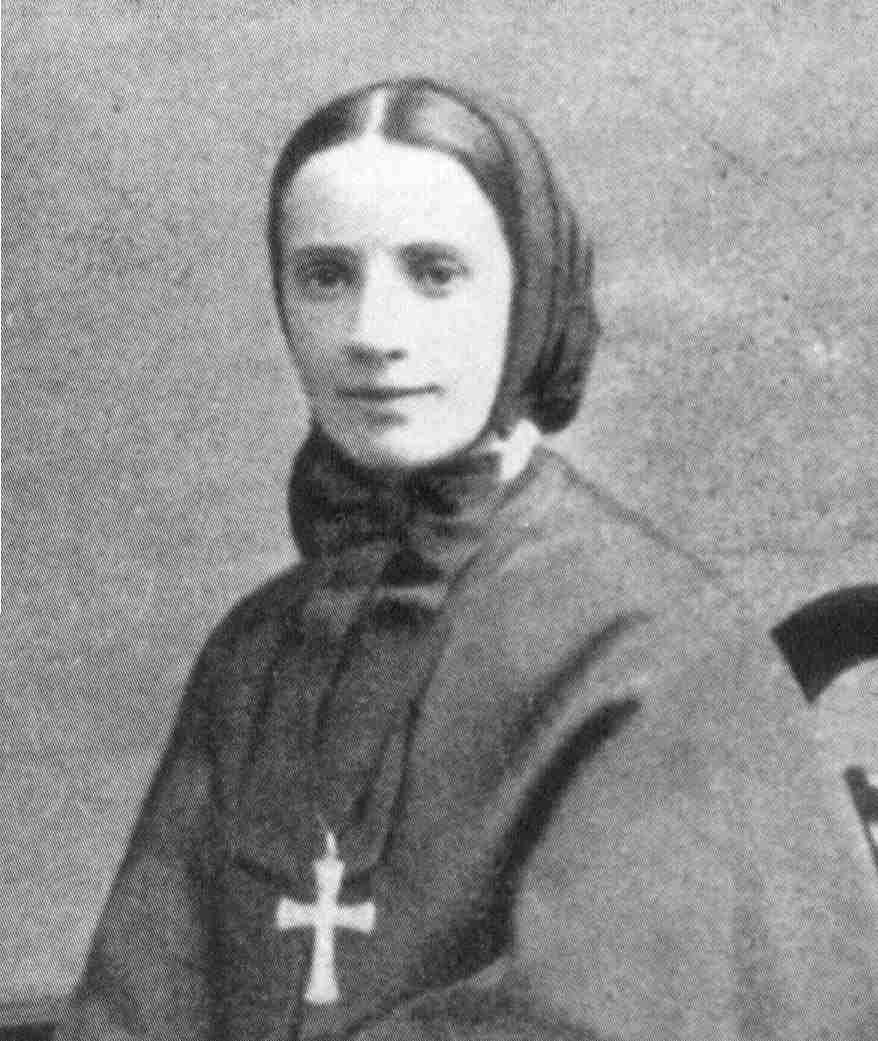
Frances Xavier Cabrini 

Better known as Mother Cabrini, Frances Xavier Cabrini (1850 – 1917) was an immigrant who dedicated her life to helping people just like her. Born in the town of Sant’Angelo Lodigiano in what was then the Austrian Empire (modern-day Italy), Maria Francesca Cabrini first joined a religious order when she was 24 years old.  

Long interested in missionary work, Cabrini founded her own order, the Missionary Sisters of the Sacred Heart of Jesus, in 1880. She eventually gained an audience with the Pope, who instructed her to travel to New York City to take care of the numerous Italian Catholic immigrants who had newly arrived there.  

After arriving in the US, Mother Cabrini spent the rest of her life traveling the country, setting up hospitals, orphanages, and other charitable institutions. Soon after her death in 1917, members of her order began campaigning for Cabrini to be made a saint for her years of work with immigrant communities.  

Their hopes came to fruition in 1946 when Mother Cabrini was made a saint. Since she became a naturalized US citizen in 1909, Mother Cabrini also became the very first American saint. For her work, she was also made the patron saint of immigrants in 1950.  

Mother Cabrini made her initial trip to the United States in late spring 1889, using the name Saveria Cabrini, an Italian version of Xavier, on board La Bourgogne.  

Wikipedia

Thank you to our team at the Family History Center for uncovering the family stories of these incredible women. To start your family story research, visit our Passenger Search HERE. 

Enjoying our content? Become a member to receive news, stories from the archives, special offers, and more! Click HERE.