By Riley Dominianni and Elena Woodruff

Irish Heritage Month

March is Irish Heritage Month! Here at the Foundation, we are celebrating by honoring the rich history, culture, and contributions of a few Irish immigrants. Throughout the 19th and early 20th centuries, hundreds of thousands of Irish men and women arrived in America seeking opportunity, resilience in the face of hardship, and the promise of a new beginning. Many passed through Ellis Island, including Annie Moore who was the first person processed at Ellis Island.  

From public service and the arts to labor movements and cultural life, Irish Americans have left an enduring mark on the nation’s identity. In honor of Irish Heritage Month, we’re highlighting a few notable individuals and stories that reflect the lasting legacy of Irish immigrants in America. Read on as we celebrate the people, history, and heritage that continue to connect Ireland and the United States. 

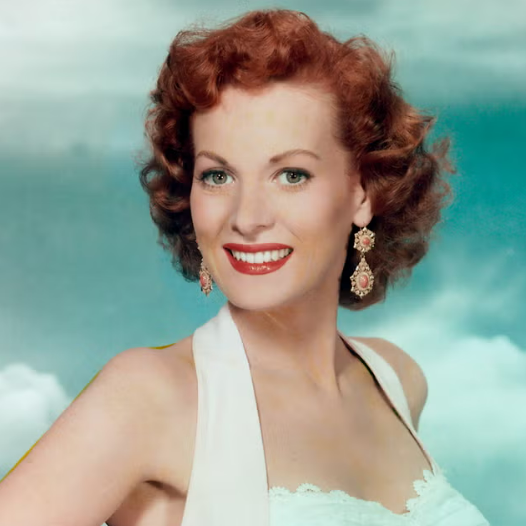
Maureen O'Hara

Considered “Ireland’s first Hollywood superstar,” Maureen O’Hara (nee FitzSimons), was an Irish-American actress known for films such as How Green Was My Valley, The Quiet Man, and holiday classic Miracle on 34th Street. She was born in Dublin in 1920 and began acting on stage as a child. By 1939, she had been discovered by British-American actor Charles Laughton. It was Laughton who insisted that she adopt the screen name “O’Hara” and star with him in Alfred Hitchcock’s Jamaica Inn. Later that year, she signed a contract with RKO Pictures and, accompanied by her mother, immigrated to the United States aboard the SS Queen Mary 

Getty Images

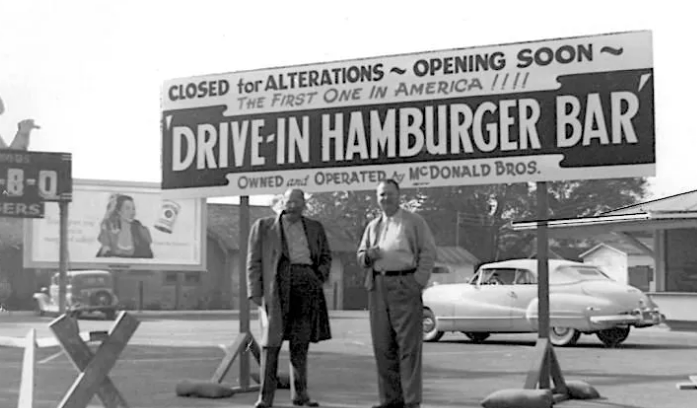
Maurice and Richard McDonald

Now boasting over 40,000 locations in more than 100 countries around the world, American fast-food giant McDonalds started out as a small, drive-in barbecue stand in San Bernardino, California. This original restaurant, opened in 1940, was the shared dream of brothers and business partners, Maurice “Mac” and Richard McDonald, who sought to create a streamlined and cost-effective way to produce high-quality meals that could be enjoyed on-the-go. By the time they began franchising their restaurant system in 1953, and eventually sold in 1963, the fast-food industry had been revolutionizedMaurice and Richard were born in 1902 and 1909, respectively, in Manchester, New Hampshire to Irish immigrants who had both come to the United States as children. Their mother, Margaret Curran McDonald, arrived in 1884 on the vessel Furnessia 

Frank McCourt

IrishAmerican writer Frank McCourt was born in 1930 to immigrants Malachy and Angela Sheehan McCourt. His Pulitzer Prize winning memoir, Angela’s Asheschronicles his early childhood in New York, but focuses primarily on his upbringing in Limerick, following the family’s return to Ireland when he was just four years old. Raw, compassionate, and often humorous, McCourt’s writing has been praised for its handling of difficult themes of poverty, mortality, and resilience. The book ends with McCourt’s return to New York, where he would spend the rest of his life. He arrived in October of 1949 on the vessel Irish Oak at nineteen years old.  

Eric Feferberg // AFP // Getty Images

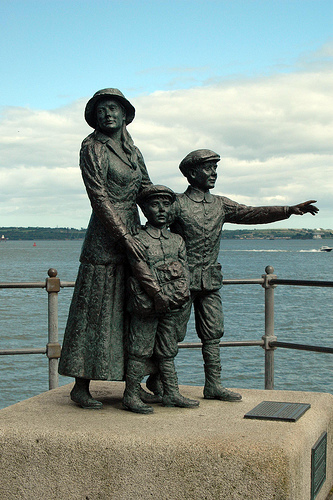
Annie Moore

In January of 1892, a young woman named Annie Moore became the first immigrant processed at Ellis Island. She traveled from Queenstown, County Cork, with her two younger brothers aboard the SS Nevada. Their parents, Matthew and Julia Cronin Moore, had been part of an earlier wave of Irish immigrants who arrived at Castle Garden, Ellis Island’s predecessor in The Battery. Today, Annie Moore is honored at the Ellis Island National Museum of Immigration with a bronze statue located on the second floor. 

Statue of Annie Moore in Cobh, Ireland

Thank you to our intrepid team of researchers at the Family History Center for their meaningful work. In honor of Irish Heritage month, we encourage you to join our Annie Moore Society today! To explore membership options, click HERE. 

Start your family history research with our Passenger Search tool HERE.