By Riley Dominianni and Elena Woodruff

In Celebration of Pi Day

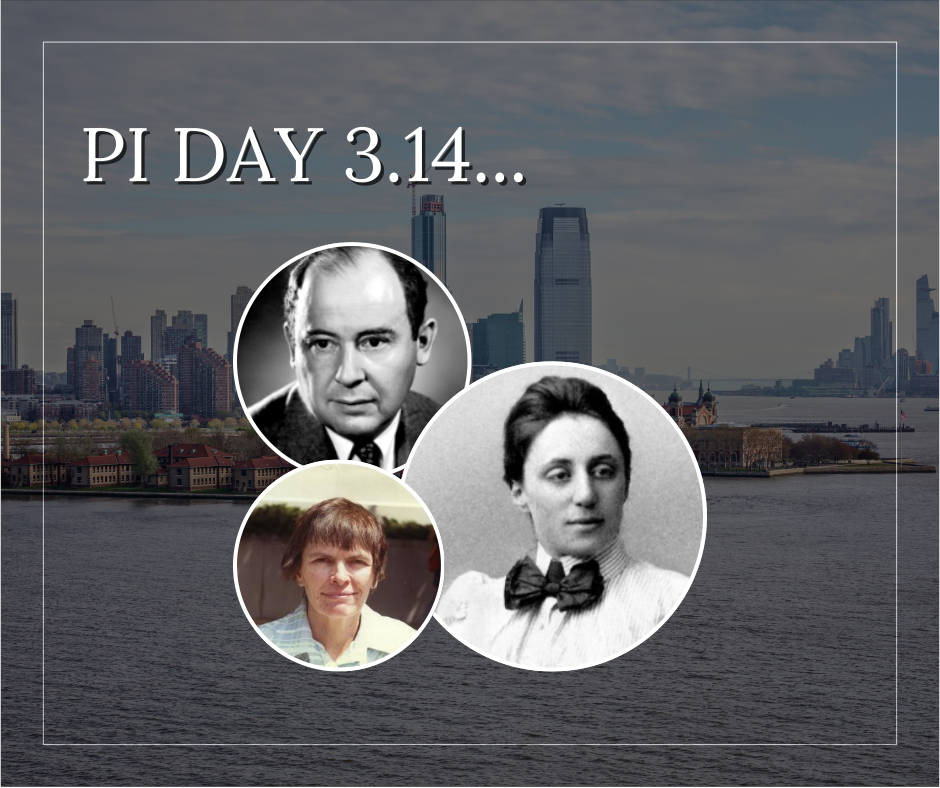
It’s Pi Day! Celebrated on March 14 (3.14), people around the world recognize the remarkable mathematical constant known as Pi. Representing the ratio of a circle’s circumference to its diameter, pi has fascinated thinkers for thousands of years, and behind its seemingly endless digits lies a long history of brilliant minds who sought to understand it. 

In honor of Pi Day, our team at the family history center has uncovered the family histories of a few legendary mathematicians. Join us as we highlight a few of the brilliant minds whose work has helped shape the world of mathematics. 

John von Neumann

John von Neumann (1903 – 1957) was a Hungarian American mathematician, physicist, computer scientist, and polymath considered one of the founding figures of computing. In 1949, he led a team that achieved 2,037 digits of Pi using the ENIAC computer, the first electronic general-purpose digital computer. The calculation took 70 hours to complete and beat the previous (manual) calculation by over 1,000 digits. He arrived in the United States back in 1931 after accepting a teaching post at Princeton University. He and his wife, Marianne, arrived at the Port of New York on the SS Albert Ballin.  
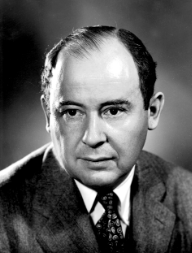
Los Alamos National Library

Emmy Noether

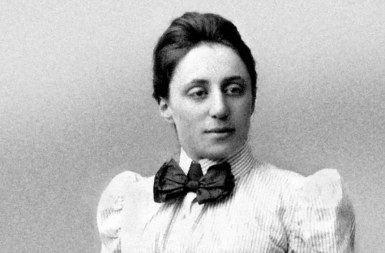
Considered one of the most important mathematicians of the 20th century, Emmy Noether (1882 – 1935), is known for developing theories of rings, fields, and algebras. She was born to a Jewish family in the Kingdom of Bavaria, formerly of the German Empire, and studied mathematics at the University of Erlangen – Nuremberg. Noether was teaching at the University of Göttingen when her position was revoked by a Nazi order that prohibited non-Aryans from working in government and higher education. She and several of her Jewish colleagues found refuge at American institutions; contemporaries such as Albert Einstein and Hermann Weyl were appointed by Princeton University, while Noether accepted a position at Bryn Mawr College. She arrived in New York aboard the SS Bremen in November 1933.  

IanDagnall Computing // Alamy

André Weil 

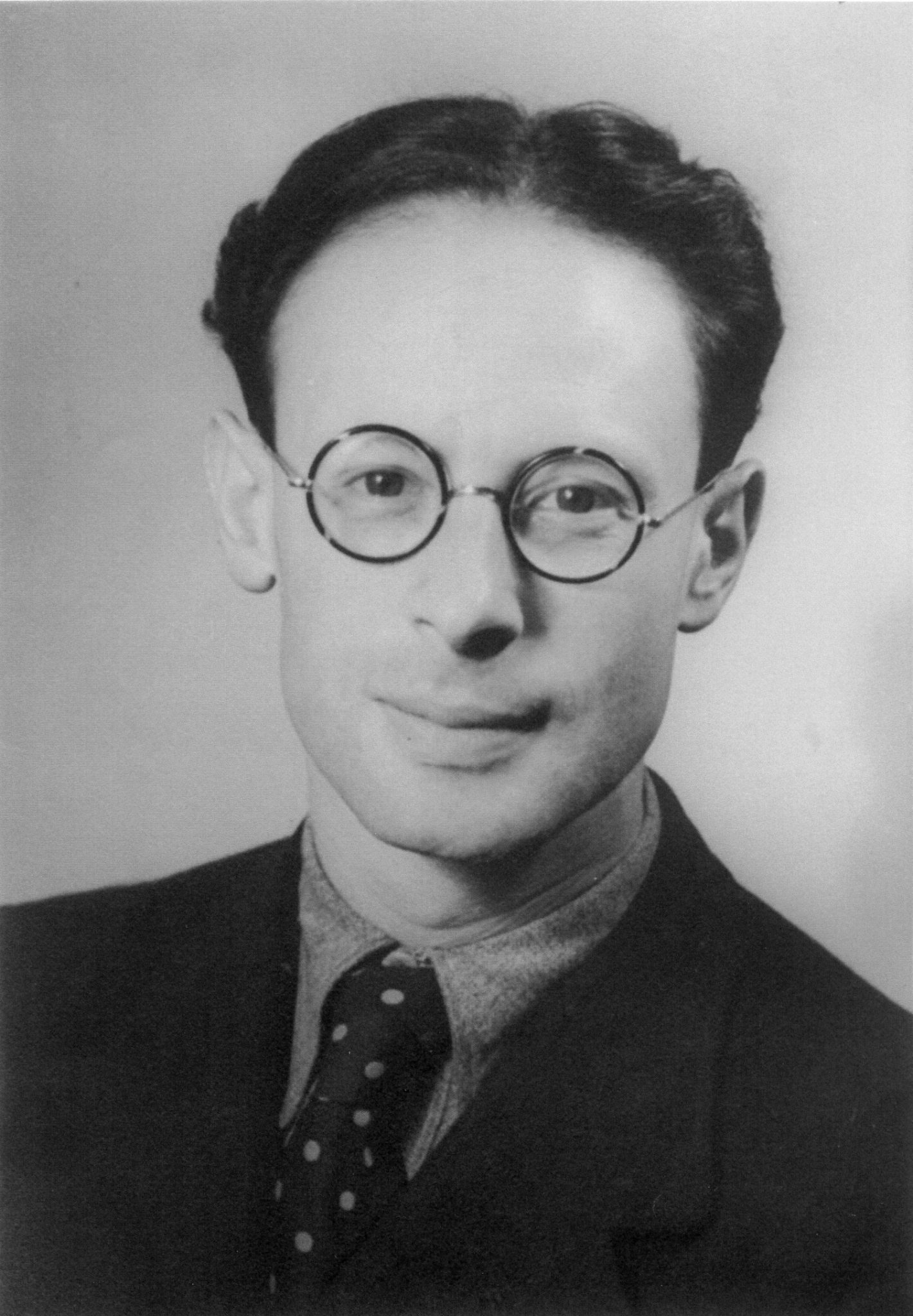
Throughout the mid-20th century, a series of rigorous and highly influential mathematical textbooks were published in France under the name Nicolas Bourbaki. What most didn’t know at the time was that Nicolas Bourbaki was not a real mathematician, rather the pseudonym of a secret society of mathematicians created in the mid-193os. Among the group’s founding members was André Weil (1906 – 1998), well known in his own right for foundational work in number theory and algebraic geometry. Born in Paris, Weil studied and worked at universities all over the world, including Princeton. In 1937, he passed through the Port of New York for a six-month stay at the institution. 

Sylvie Weil

Julia Robinson

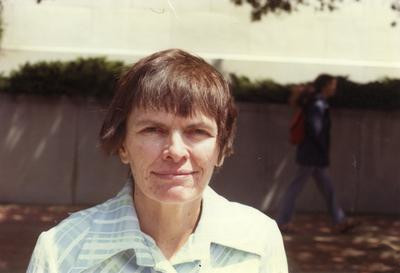
Julia Robinson (1919 – 1985) was an American mathematician from St. Louis, Missouri, who made significant contributions to the fields of computability theory and computational complexity theory. A recipient of the prestigious MacArthur Fellowship and the first female mathematician in the National Academy of Sciences, she was selected to be the American Mathematical Society’s first female president in 1982, but was unfortunately unable to accept due to illness. Robinson has a connection to New York’s early immigration history; her maternal grandmother immigrated from England in 1855 on the ship Jeremiah Thompson.  

George Bergman

Many thanks to our team at the Family History Center for uncovering the family stories of these impactful mathematicians. Visit our Passenger Search HERE to start your family story research today. 

Before you go, don’t forget to become a member of the Foundation. Your continued support helps to sustain the Statue of Liberty and Ellis Island! Click HERE.